•How it works
Three movements,
phone to wall.
It starts with a photograph you already have and ends with something hanging in your hallway. There is nothing to book, nobody to brief, and your pet never has to sit still for any of it.
-
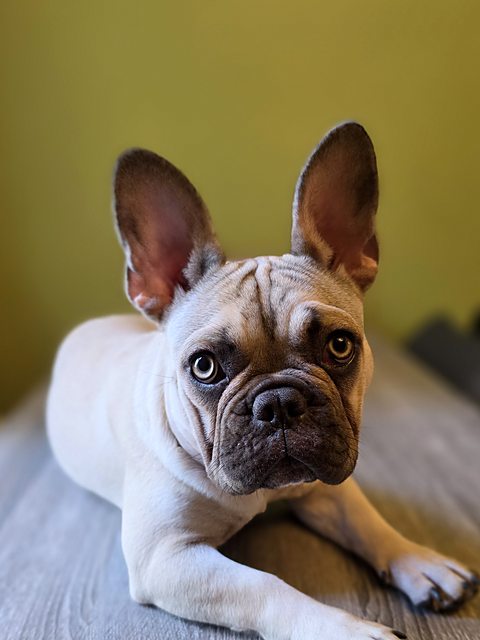
The photograph, as it arrived The sitting
Upload one clear photograph at the desk. One snapped on your phone is perfect — the one you would send a friend is usually the right one. It stays on your device until you confirm the commission, and it is never posted anywhere.
Takes a minute
-
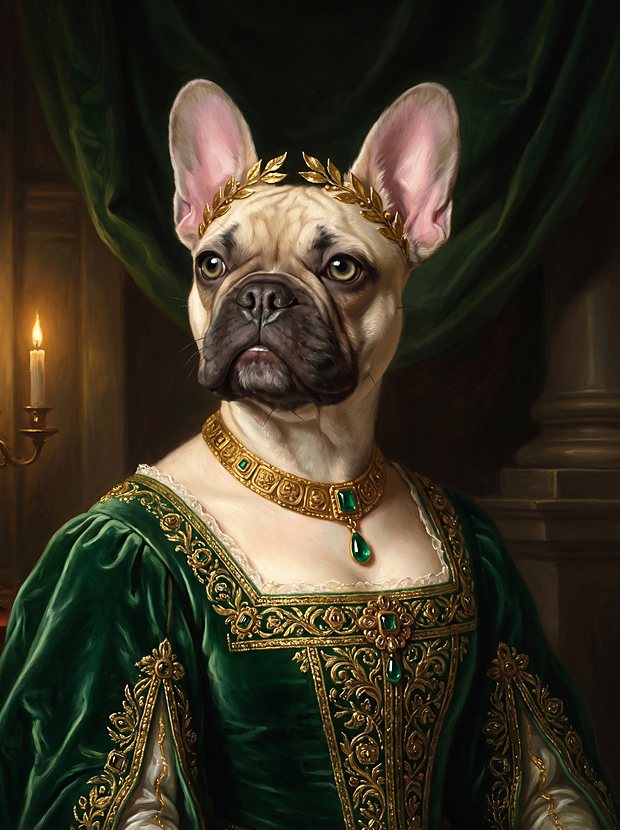
The painting, sent to approve The painting
We choose the archetype that suits the sitter, render them in the classical oil style, and refine it by hand until the likeness is unarguable. The portrait comes back to you and to nobody else. Revisions until it is unmistakably them, at no charge.
Two to three days
-
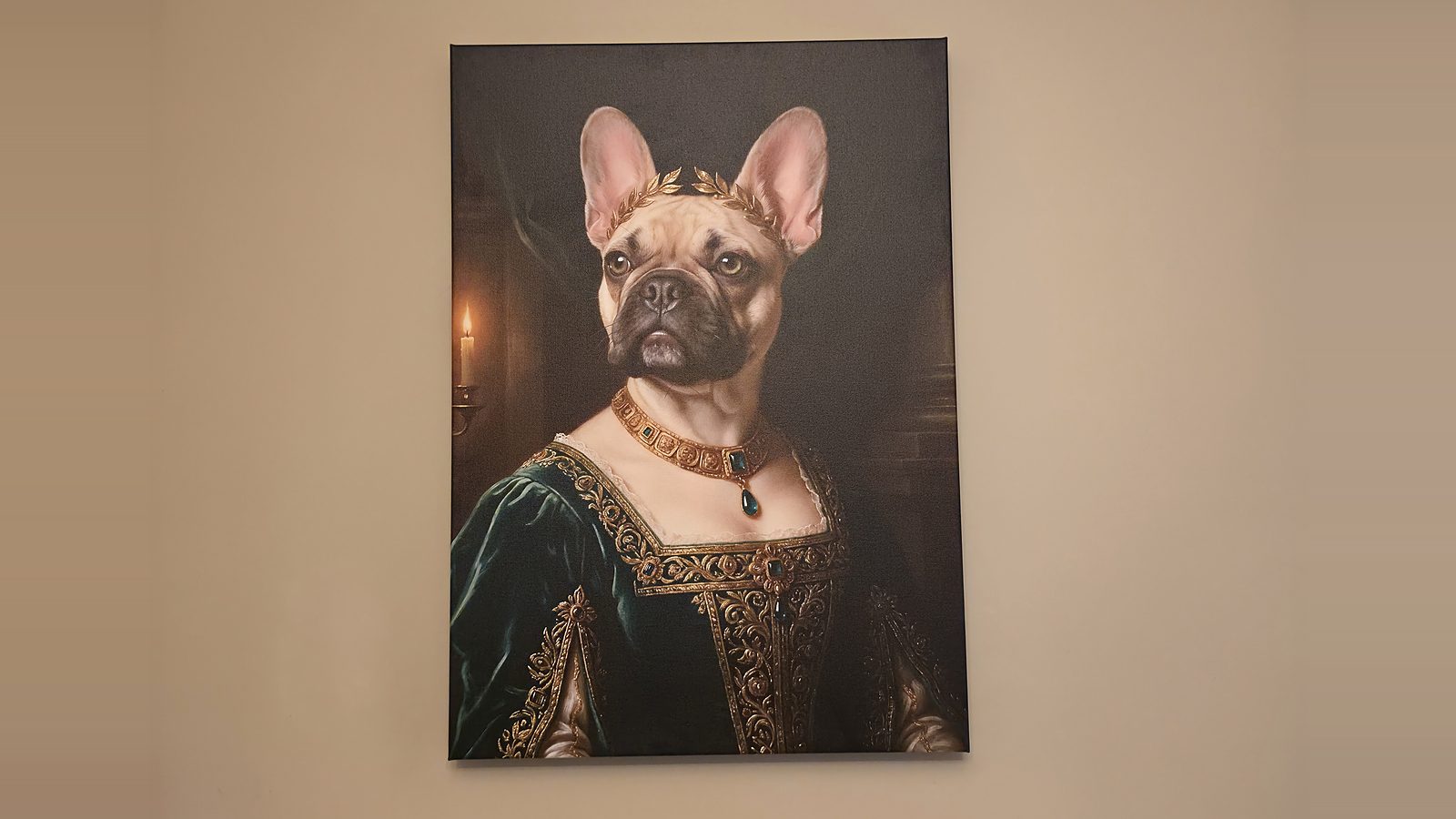
On the wall, three to five days later The unveiling
Only once you have approved it is anything printed. Giclée on 400gsm museum canvas, stretched by hand in Britain over a 38mm bar, and boxed with corner protectors so it reaches your wall exactly as it left the atelier.
Three to five days in the UK
How it’s made
Every portrait is created with AI, rendered in the style of a classical oil painting, then directed and refined by hand until it is unmistakably your pet. You see it and approve it before anything is printed. Only then is it printed on 400gsm museum canvas and stretched by hand in Britain. New tools, the same standard we started with: if we wouldn’t hang it in our own home, we do it again, at no cost to you.
The photograph
you already have
This is the only part that is yours to get right, and it is easier than it sounds. Nobody has ever had to take a new one.
What helps
- Daylight, indoors or out. A window is plenty.
- Both eyes visible, and roughly level with the camera.
- Head and shoulders filling a good part of the frame.
- Taken on a phone. Every portrait in the ledger began on one.
What doesn’t matter
- A messy room. It never reaches the portrait.
- A lead, a collar, a hand in the corner of the frame.
- The age of the picture. Some are fifteen years old.
- A little blur. For a memorial, none of this matters at all.
You see the portrait before we ever print it. If it isn’t right, we do it again until it is.